Stored-Product Pests: Weevils & Moths

Weevil larvae develop inside the grain kernel itself, and stored-product moths form webbing in the deeper layers of stock – both in places surface treatment cannot reach. Enclosed-space fumigation is the only method against them that penetrates the full cross-section and affects every developmental stage.

Stored-Product Pests (Sitophilus spp. · Plodia interpunctella)
Sitophilus spp. · Plodia interpunctella

How to recognise it

Compare it with what you found. If you are not sure, send us a photo – a preliminary identification means we arrive with the right method from the start.

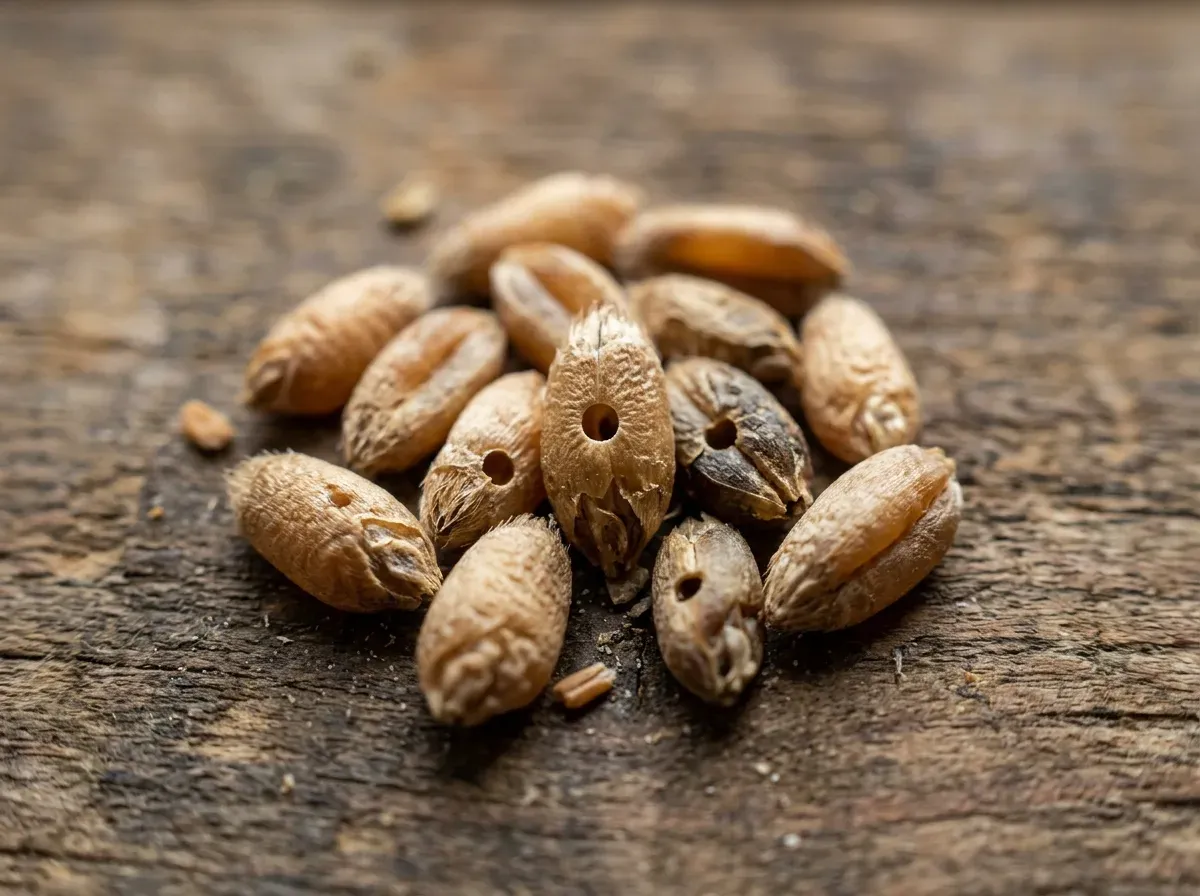
  1. A tiny, round emergence hole in the grain kernel

    1A tiny, round emergence hole in the grain kernel

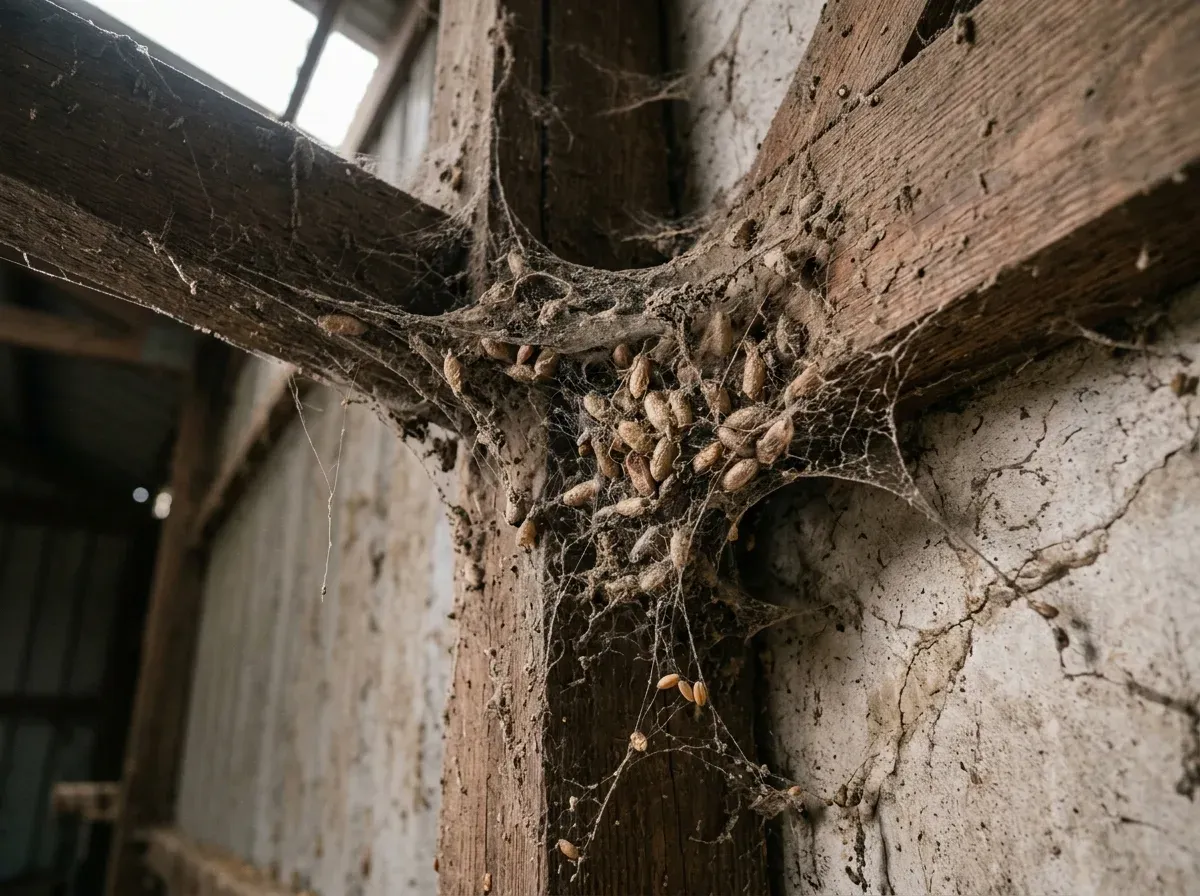
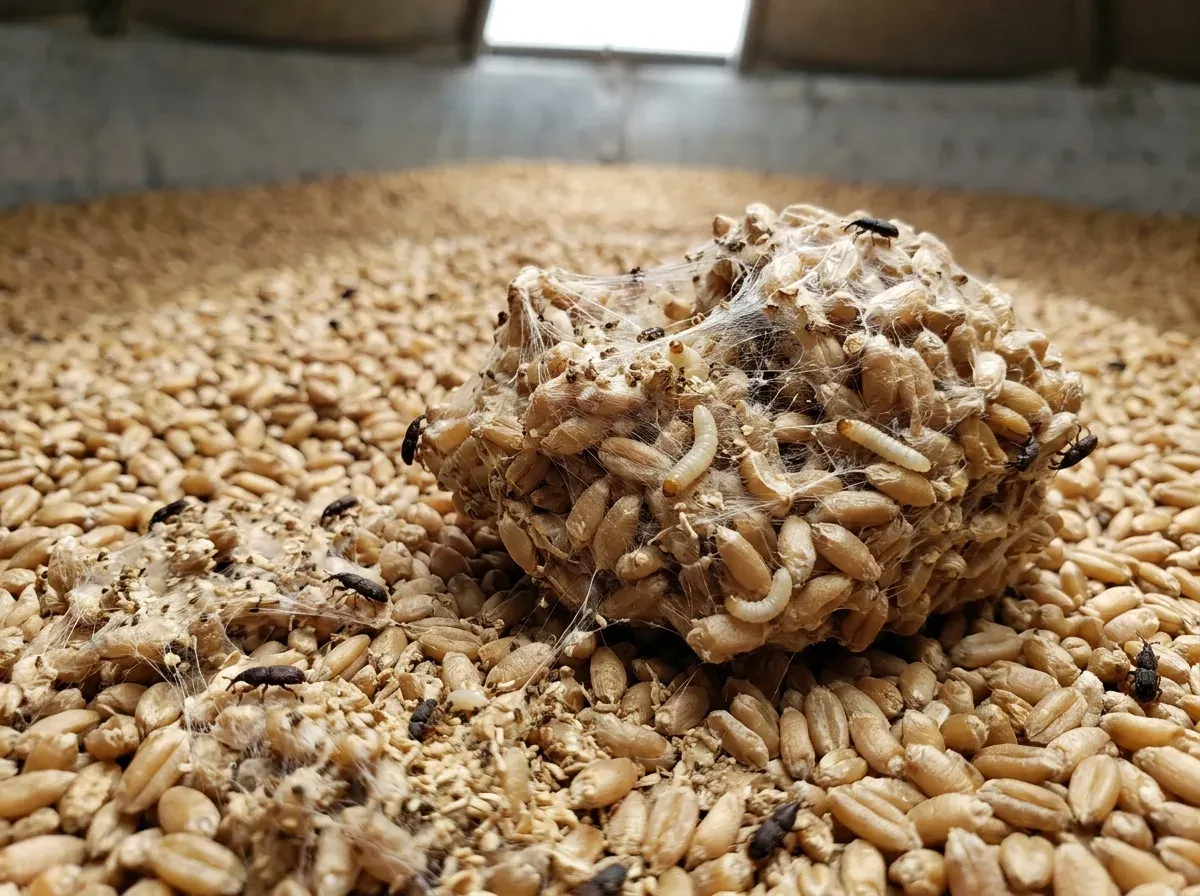
  2. Webbing and clumped-together grain

    2Webbing and clumped-together grain

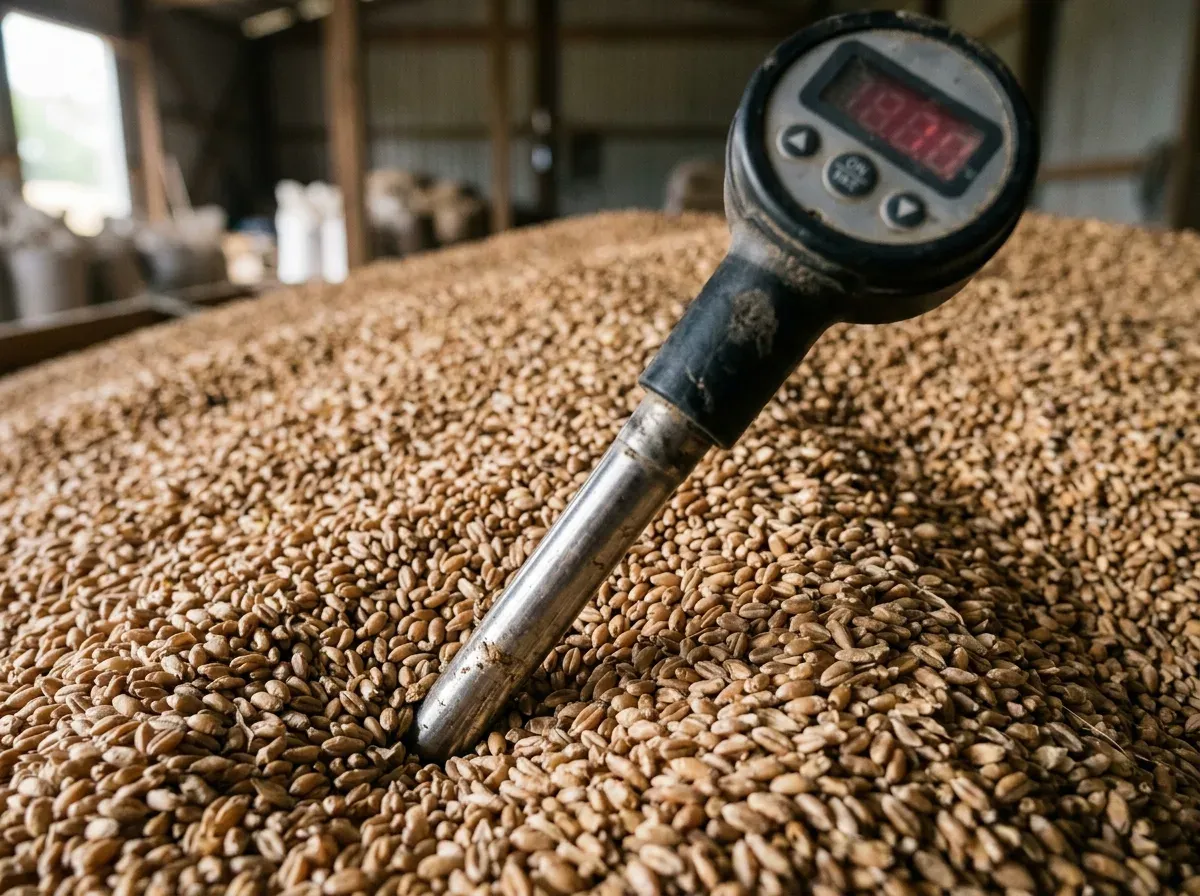
  3. Hot spots forming in the stored batch

    3Hot spots forming in the stored batch

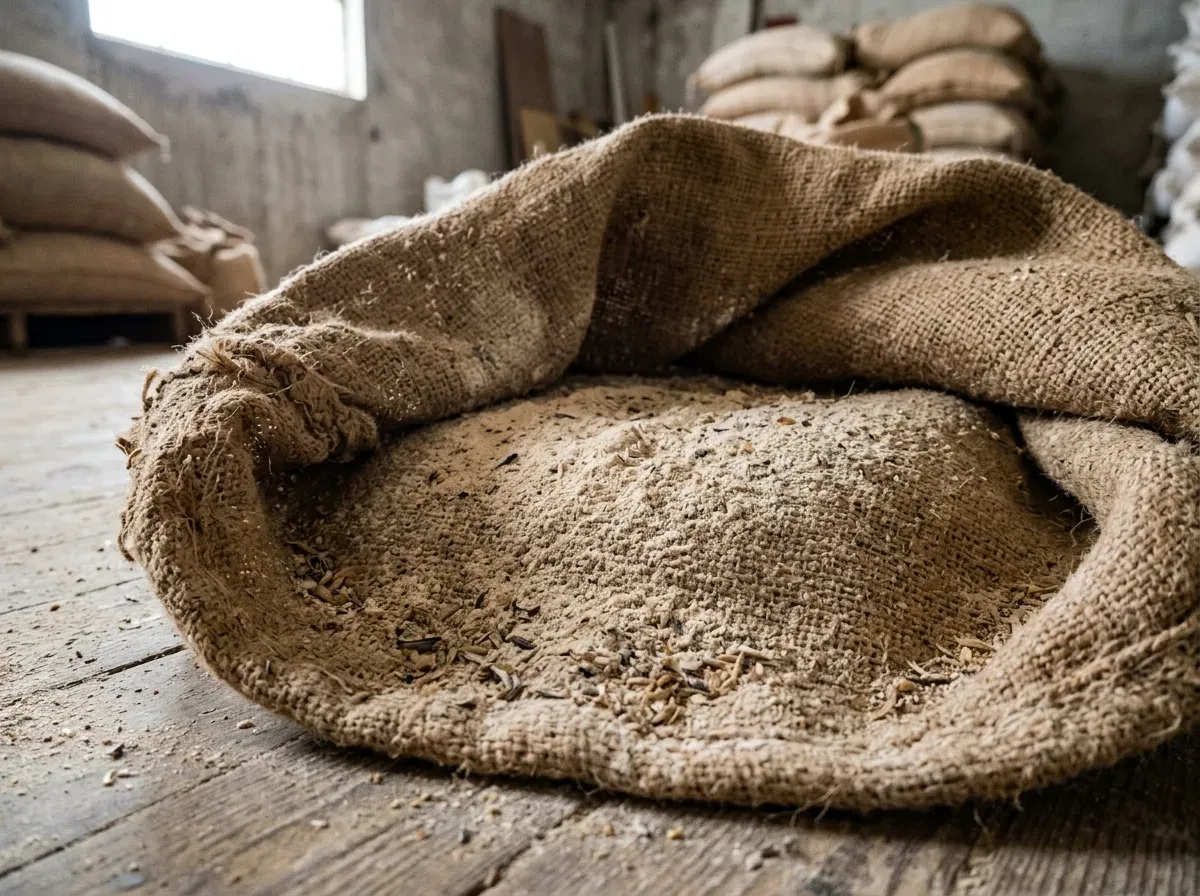
  4. Floury dust at the bottom of a sack or storage bin

    4Floury dust at the bottom of a sack or storage bin

Why it’s different from other insect pests

Stored-product pests live inside the stored grain, not in the air space of the storage building. In practice this means the developing stages – the larvae and eggs – are inside the stock, at a depth that neither spraying nor fogging can reach.

This is why control of stored-product pests is not a variant of insect control but a separate technology: enclosed-space fumigation, which penetrates the entire air space of the storage building and the full cross-section of the batch.

The two typical groups

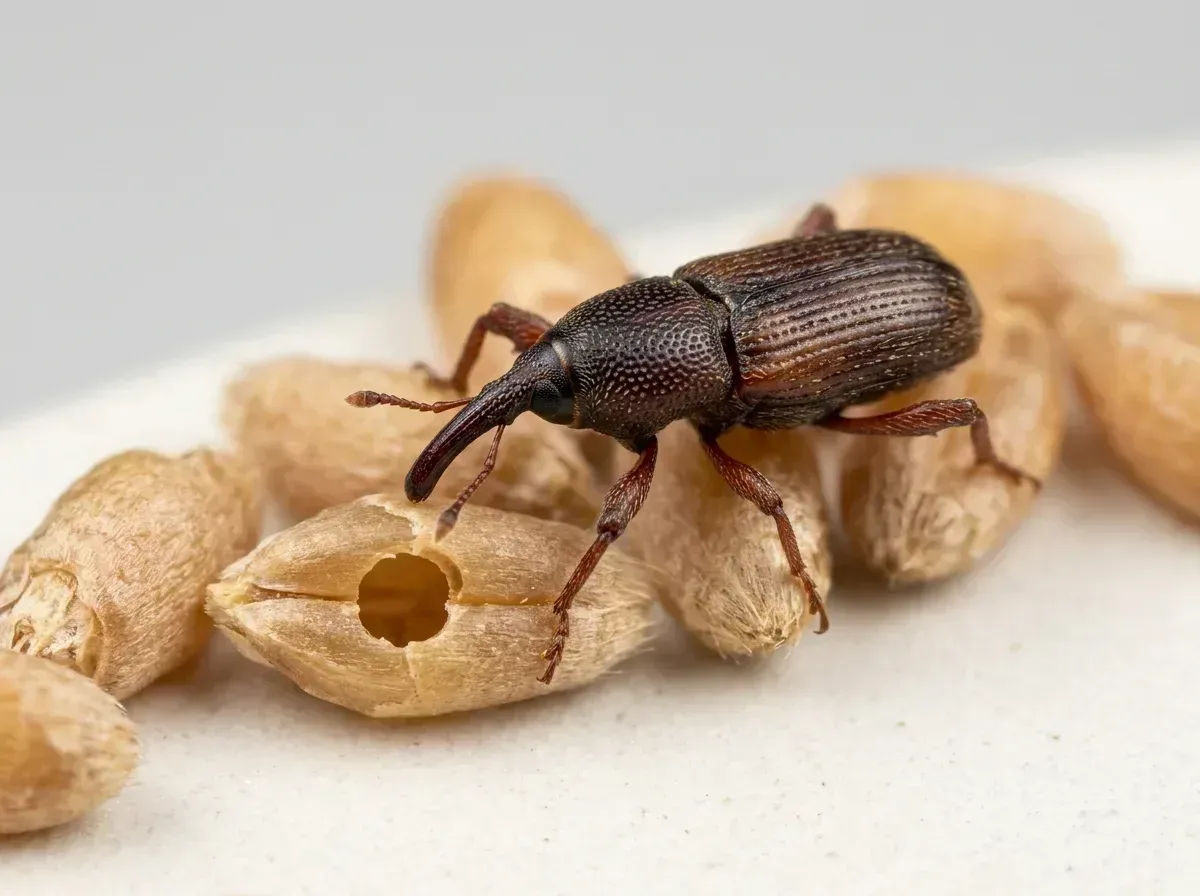
Weevils – the female lays her egg inside the grain kernel, and the larva develops by hollowing out the inside of the kernel. The emerging adult leaves a tiny, round emergence hole in the kernel – the most characteristic sign, visible to the naked eye. The weight and germination capacity of an affected batch also drop.

Stored-product moths – the larva spins webbing on the surface and in the deeper layers of the stock. The telltale sign is clumped, matted grain, webbing appearing on the walls and ceiling of the storage building, and swarming moths.

With both groups, the batch can start to heat up – because of the insects’ metabolism and the microbiological processes that follow in their wake. Localised heating on its own already justifies inspecting the batch.

What fumigation requires

Treatment is not just a matter of applying the product. Planning includes checking how well the storage space can be sealed, determining the exposure time based on temperature and batch size, and checking the ventilation and residual gas concentration, after which the storage space can be put back into use.

This is an activity that requires a permit and a certified fumigator qualification. ARZÉN Kft. carries it out under a certified fumigator’s supervision, and hands over the full documentation – a copy of the permit, the safety data sheet, the treatment report – because that is what both the buyer and the audit require.

Prevention

Cleaning before storage and removing leftover stock is the cheapest intervention available in this area – infestation typically carries over from the previous batch in the storage space. This is complemented by checking temperature and moisture content, and by pheromone-trap monitoring, which signals when swarming is starting.
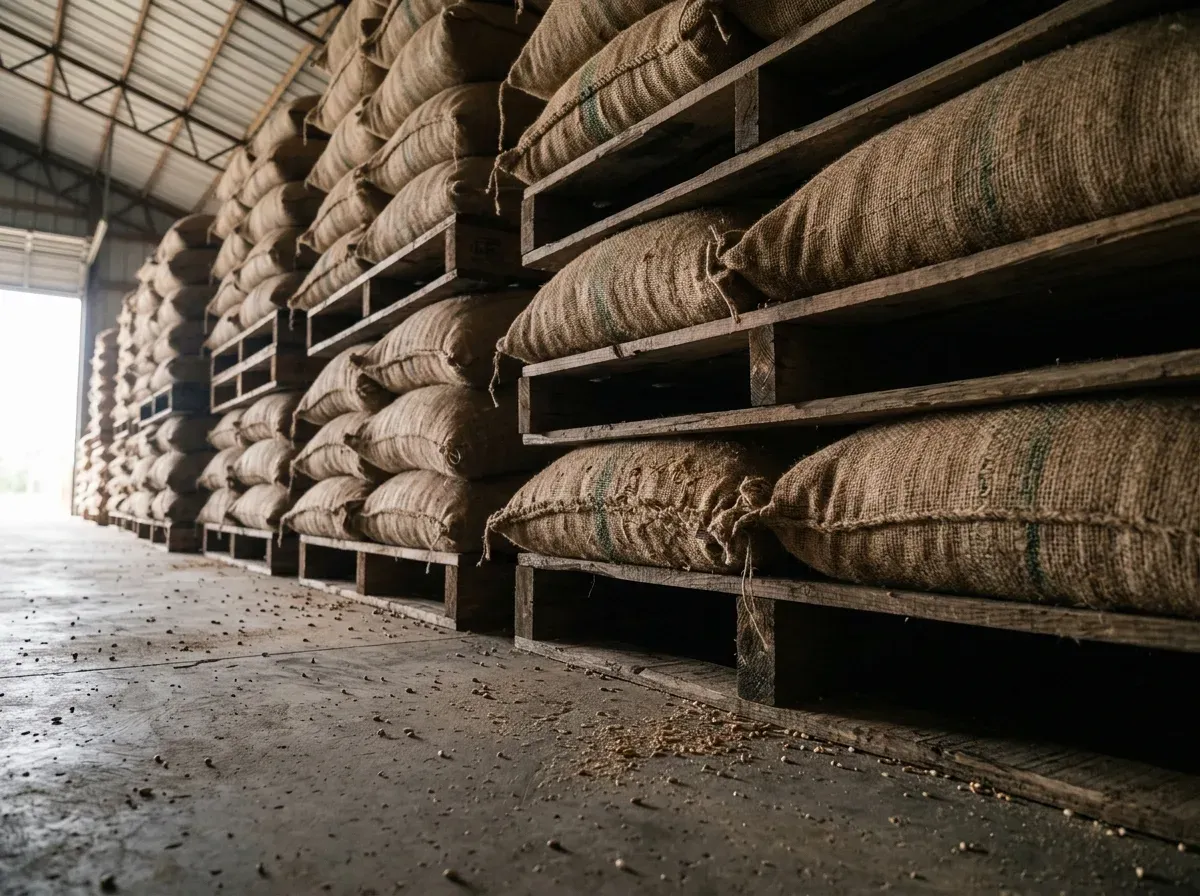
Where it hides, where it comes from

Treatment starts where the animal actually is – these are the first places we check during the survey.

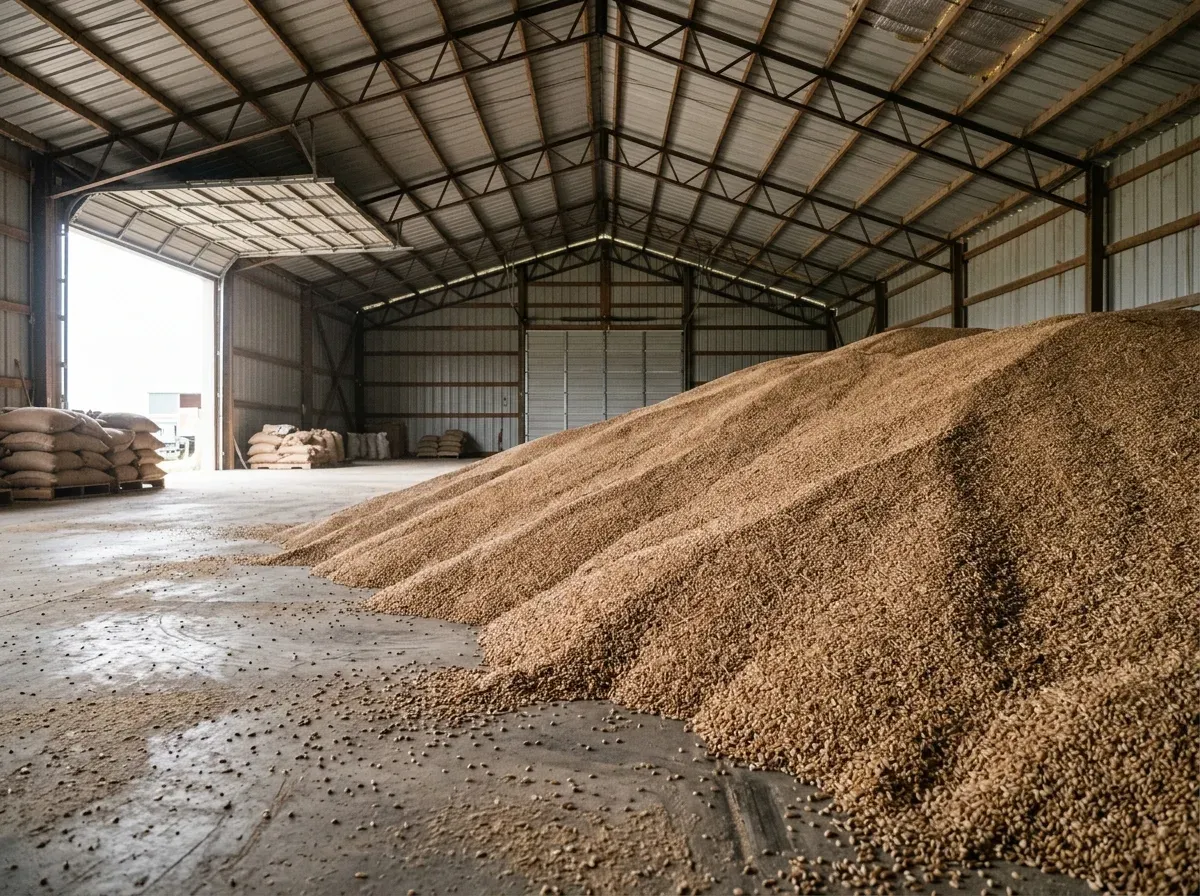
  • A bulk grain heap – the larvae develop inside the batch

    A bulk grain heap – the larvae develop inside the batch

  • Sack storage – the bottom of sacks and the gaps between pallets

    Sack storage – the bottom of sacks and the gaps between pallets

  • The walls and ceiling of the storage building, where webbing appears

    The walls and ceiling of the storage building, where webbing appears

Clothes Moth or Stored-Product Moth?

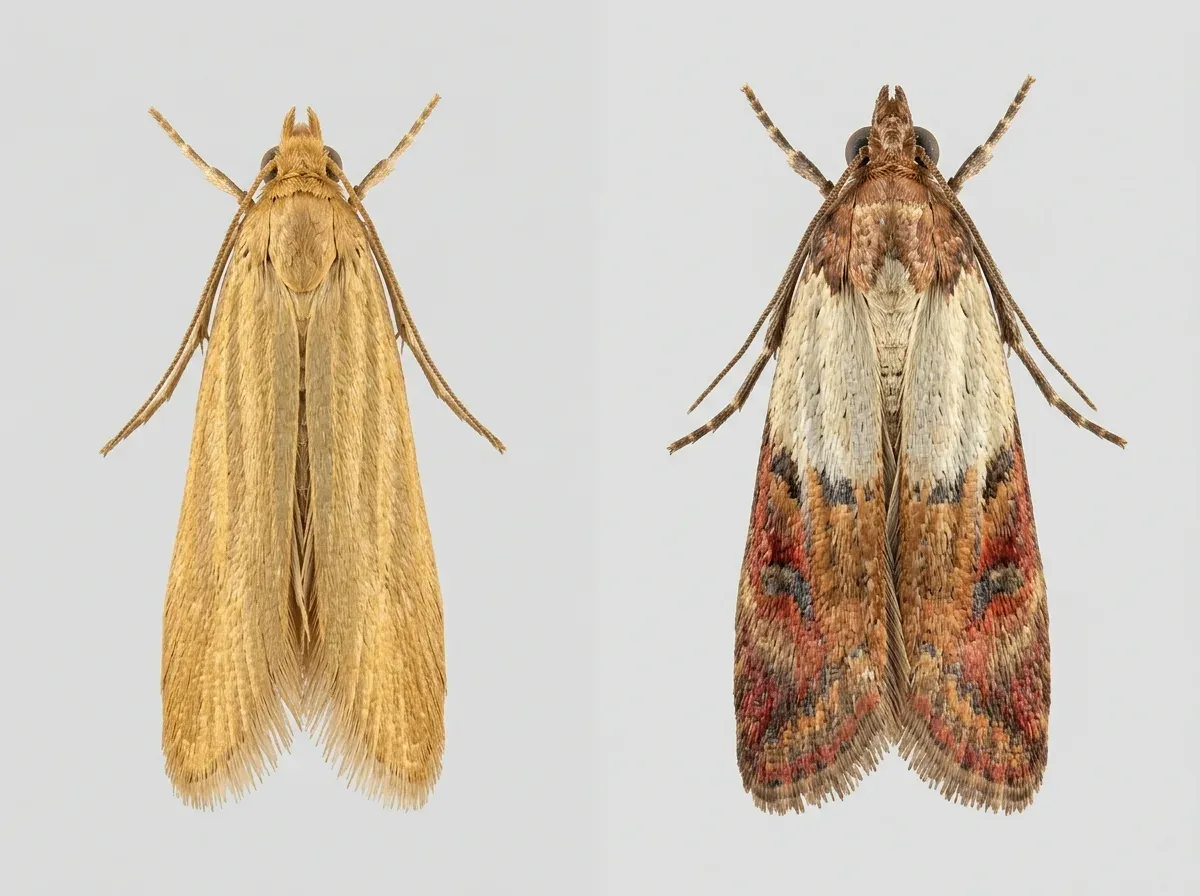
Two similar species in one photo, at the same scale. The difference is not only the name: the two need different treatments.

Clothes moth and Indian meal moth side by side, at the same scale
Left: Clothes Moth · Right: Stored-Product Moth (e.g. Indian meal moth)

Clothes MothLearn more →

  • 6–8 mm, uniform golden-yellow, fringed wing edges
  • In the wardrobe: wool, cashmere, fur, feathers
  • The larva eats keratin; the adult moth does not feed
  • Scurries more than it flies, and avoids light

Stored-Product Moth (e.g. Indian meal moth)

  • 8–10 mm, two-tone wing: pale base, copper-brown tip
  • In pantries and warehouses: flour, grain, dried fruit, feed
  • The larva spins webbing in the food
  • Flies towards light

Same word, two different pests. The clothes moth is a wardrobe problem, the stored-product moth a pantry and warehouse problem: treating the textiles is the answer against one, treating the stock against the other – fumigation for an industrial-scale batch.

Frequently asked questions

Why isn't surface treatment enough?

Because weevil larvae develop inside the grain kernel, and stored-product moths develop in the deeper layers of the stock. Surface spraying reaches the surface of the grain, not the developing stage, so a new generation hatches after treatment. Enclosed-space fumigation, by contrast, penetrates the full cross-section and affects every developmental stage.

Who is allowed to carry out grain fumigation?

It's an activity that requires a certified fumigator qualification and a separate permit. ARZÉN Kft. carries it out under the supervision of a certified fumigator, with an approved product, and hands over full documentation of the treatment.

How long does the treatment take?

The exposure time depends on temperature, batch size and how gas-tight the seal is, so we determine it batch by batch. Planning also includes the ventilation time and measuring the residual gas concentration, because the storage space can only be put back into use after that.

Can infestation be prevented?

Largely, yes. Cleaning before storage, removing leftover stock, checking temperature and moisture content, and pheromone-trap monitoring together ensure that a problem is caught while it can still be treated at low cost.

More from us