Why does documentation fail at audit?
Food-industry audit experience shows that most non-conformities in the pest control section don’t come from finding a pest, but from being unable to prove the programme is working. The site plan is missing, past reports are missing, or there’s no data series showing that pressure has fallen as a result of interventions.
The monitoring system produces exactly that evidence.
What exactly does an audit expect from pest control documentation? We cover that in our guide to HACCP pest control requirements.
What does it include?
Numbered point network
UV light traps for flying insects, glue-board monitors for crawling insects, bait and trap points for rodents. Every device is numbered and added to the site plan.
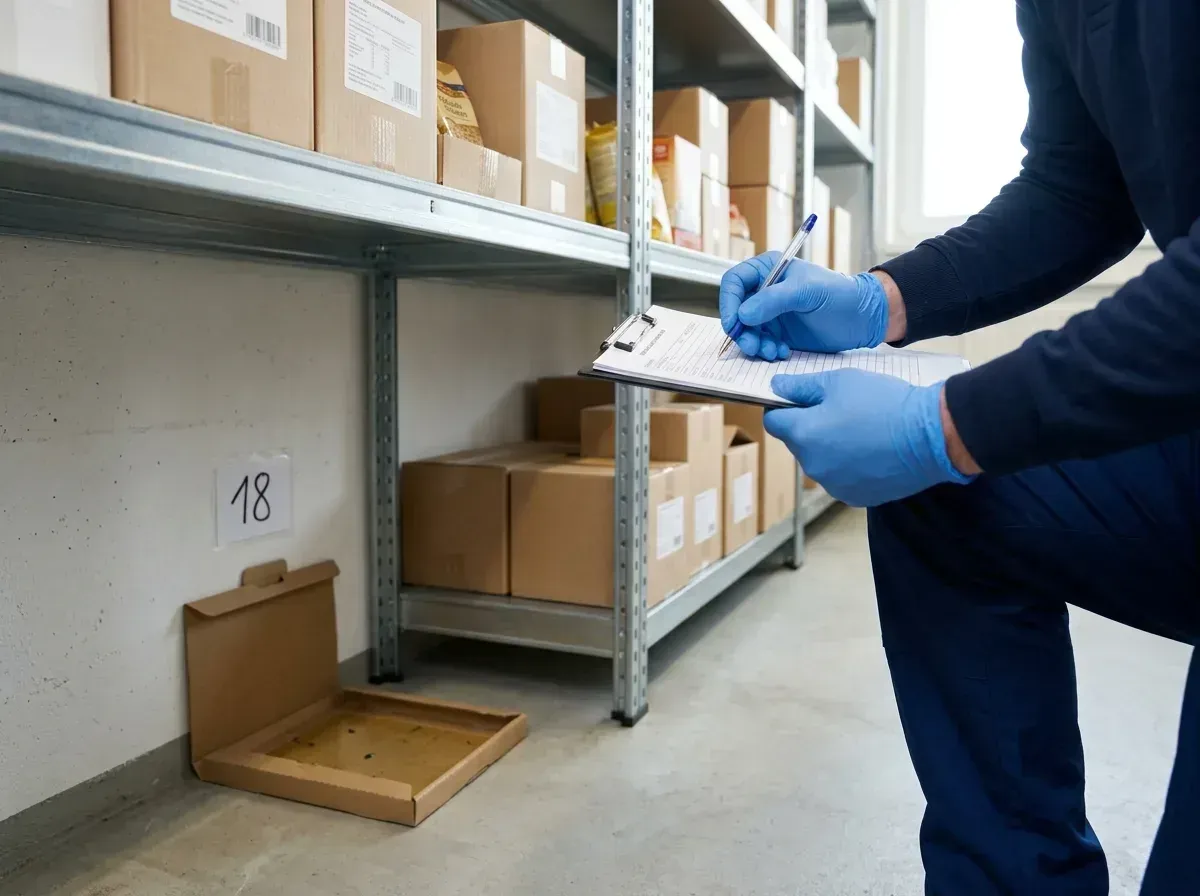
Scheduled inspection
Inspection frequency is set by the zone’s risk classification: more frequent in high-risk areas — raw-material intake, packaging — less frequent in lower-risk storage.
Recording catch data
Point by point, dated — this is the data series the trend is built from.
Trend analysis and recommendations
The summary shows where pressure is rising. If the catch at points near a particular gate rises month over month, it points to a structural problem — and the repair delivers a more lasting result than more frequent treatment.
The annual summary
Each year we produce a summary containing the point network’s current site plan, annual catch trends by zone, the interventions carried out, and recommended structural measures. This is the document that demonstrates, at an IFS or BRCGS audit, that the pest control programme is working.